Robin Lansman, Principal Osteopath at Body Back-Up and Trustee of the Institute of Health Promotion and Education
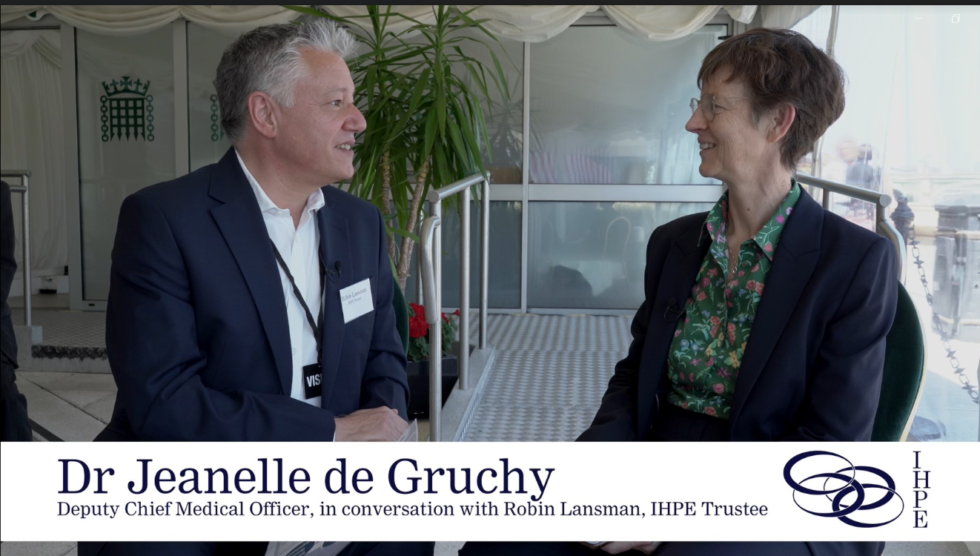
In June 2023, the Institute of Health Promotion and Education (IHPE) marked its 60th anniversary at the House of Commons. As an IHPE Trustee, I was there — and one of the more memorable parts of the evening was a conversation with Dr Jeanelle De Gruchy, Deputy Chief Medical Officer for England.
Three years on, what she said still shapes how we think about our work at Body Back-Up.
Health starts long before the clinic door
Dr De Gruchy made a point we see borne out every week in practice: health outcomes are rarely just about biology. Where someone lives, what work they do, what they can afford, and the culture they grew up in all feed into how well they are and how quickly they recover.
That’s why single-issue fixes so often fall short. If a patient’s back pain is being driven by a job they can’t change, a home they can’t heat properly, or stress they have no space to unload, treating the tissue alone will only get us so far.
Stopping problems before they start
Her strongest theme was the case for prevention. Rather than waiting for illness to arrive and then managing it, she argued for putting far more effort into keeping people well in the first place — and into helping people understand their own health well enough to act on it.
This is the heart of health promotion: giving individuals and communities the knowledge and confidence to take charge of their own wellbeing.
It’s also the reason our appointments are built around explanation as much as treatment. We want patients leaving with an understanding of why something happened and what they can do differently, not just relief that it’s eased for now.
No one profession can do this alone
Dr De Gruchy was clear that public health challenges are a shared responsibility. Clinicians, policymakers, teachers, community organisations and individuals all have a part to play, and the results are far better when those groups work with each other rather than in isolation.
For us, that means staying connected — with GPs, consultants, personal trainers, workplaces and local groups — so patients get joined-up support rather than a series of disconnected appointments.
Health inequality is the uncomfortable part
She didn’t shy away from the gap in health outcomes between different population groups. Those differences track closely with the uneven distribution of money, housing, education and environment, and they mean two people with the same complaint can face very different roads to recovery.
The practical implication is that health promotion can’t be one-size-fits-all. It has to be shaped around the real barriers people face — cost, time, language, transport, confidence — or it simply won’t reach the people who need it most.
Where this leaves us
Health is more than the absence of disease. The World Health Organization’s definition, a state of complete physical, mental and social wellbeing, sets a much higher bar, and hitting it takes prevention, collaboration and a serious effort to close the gaps between groups.
At Body Back-Up we’ve worked to that standard since 1988. Whether you come to us in West Hampstead or Maidenhead, our aim isn’t only to get you out of pain. It’s to help you understand your body well enough to stay well.
Body Back-Up Healthcare has been treating musculoskeletal pain and sports injuries since 1988, with clinics in West Hampstead, London and Maidenhead, Berkshire. Book an appointment or get in touch to talk through how we can help.




 Trustpilot